There’s something rather curious about a diorama. A scene no bigger than a dinner plate can suggest a whole world beyond its edges.
A quiet woodland clearing, a cottage tucked beneath a toadstool, workers relaxing next to a railway line or perhaps somewhere that holds a special memory.
The word itself has been around since 1822, when dioramas were enormous illuminated paintings displayed in Paris. Quite a departure from the little scenes I make today, although the intention wasn’t so different: to create the illusion of another place.
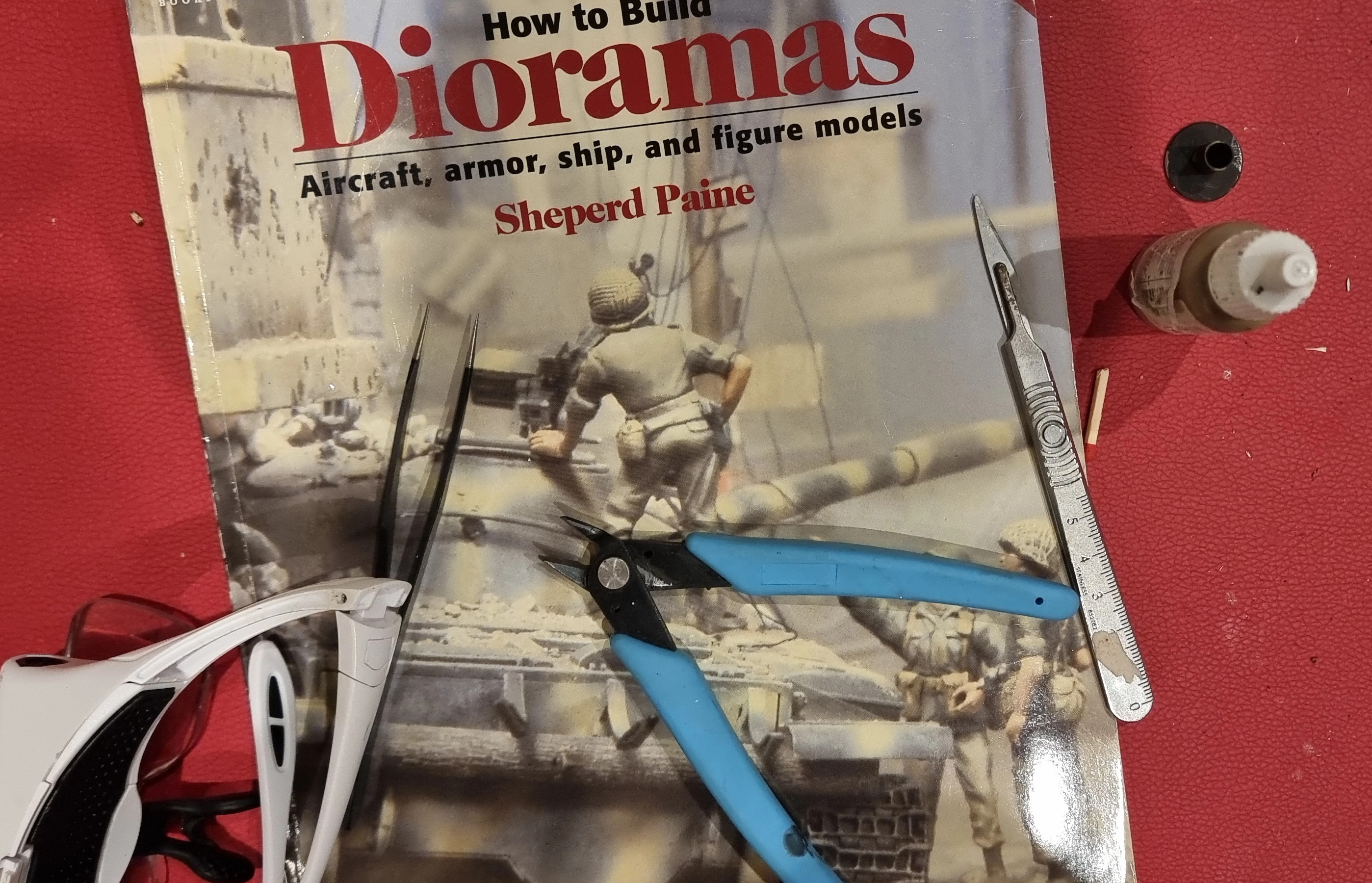
I still have my old copy of Sheperd Paine’s How to Build Dioramas. It’s a little battered now, but the ideas have stayed with me. Paine understood that a diorama wasn’t simply a collection of carefully made objects. It was a moment in time, with something happening before and perhaps something still to come.
Dioramas can take many forms, from elaborate museum displays to tiny worlds tucked inside glass cloches, old metal tins or scenes within glass-fronted display frames – shadow boxes as they are known.
But for me, there’s rather more to it than simply making things smaller.
Unlike a painting or photograph, a diorama occupies its own little space. You can look around it, lean closer and discover details you hadn’t noticed before. At its best, it offers a glimpse into a world that feels as though it exists beyond the edges of the scene.
And unlike a model, such as some of my OO gauge lineside scenery, which might faithfully reproduce a single object, a diorama brings different elements together to create a complete scene. It’s not simply about what each individual piece looks like, but how they relate to one another, creating a sense of place, atmosphere and perhaps a story waiting to be discovered.
More than making things smaller
Before I start making anything, I plan the scene as a whole. I think about what should catch the eye first, where the viewer’s attention might travel next, and how the different elements will work together.
Sometimes the smallest decisions make the biggest difference. Moving a tree slightly to one side might open up a view, while changing the position of a rock can make a path feel more natural. I’ve found that adding more detail doesn’t necessarily improve a scene. Sometimes it just makes it look cluttered.
There’s an element of artistic licence, too. Nature doesn’t always arrange itself conveniently, and what works in the real world doesn’t necessarily work in miniature. Proportions, colours and textures sometimes need adjusting to create something that feels right, even if it isn’t entirely accurate.
Much like a landscape painter, I’m making choices about what to include, what to emphasise and, perhaps most importantly, what to leave out. The aim isn’t simply to reproduce a place in miniature, but to create something that feels like a place in its own right.
Leaving something to the imagination
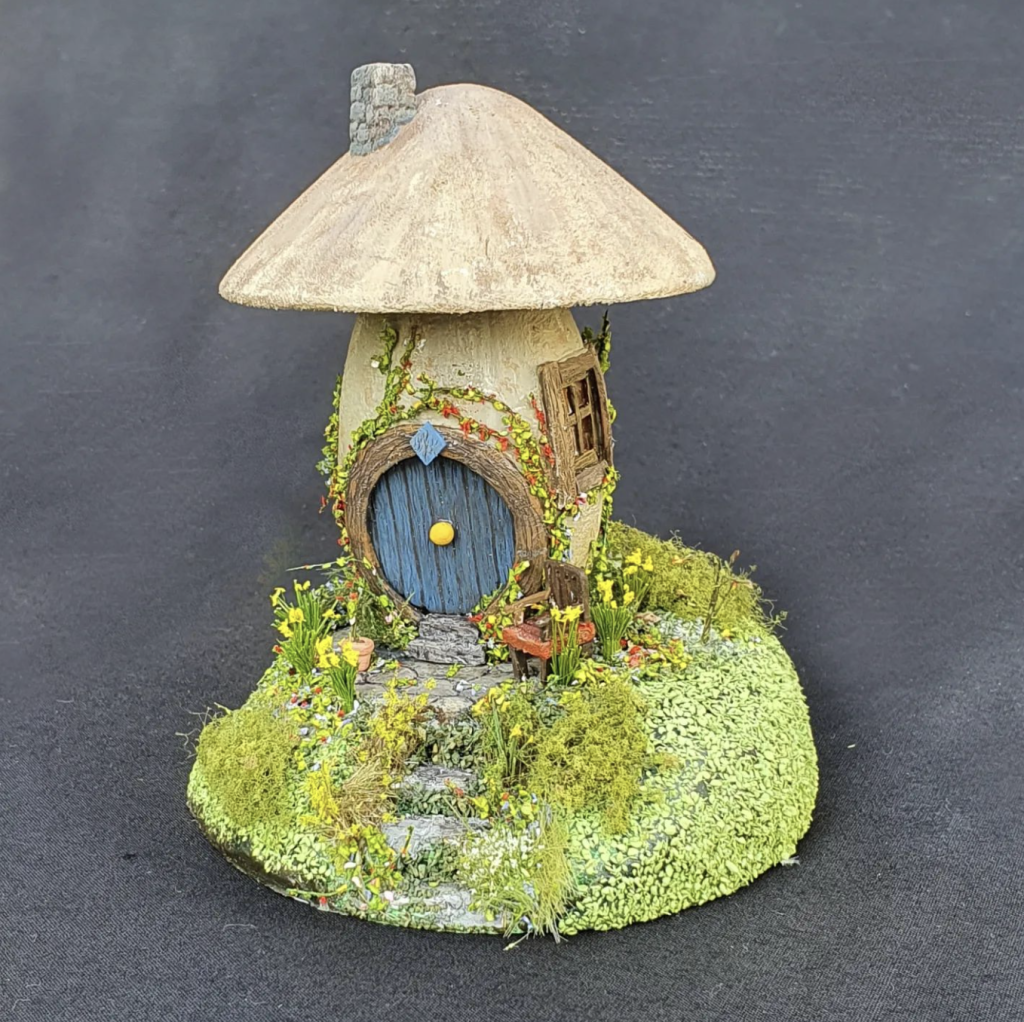
One of my favourite pieces is the Mushroom Cottage. A little blue door sits beneath the curved roof of a toadstool, surrounded by moss and tiny wildflowers.
There’s nobody in sight, but the cottage suggests someone lives there. Perhaps they’ve gone out for the afternoon, or maybe they’re watching through the little window.
I could have added a figure, furniture or all sorts of other details.
But I rather like leaving those things to the imagination.
Sometimes knowing what to leave out is more important than knowing what to put in.
Capturing a feeling
Not every diorama needs a fantasy setting or an imagined story.
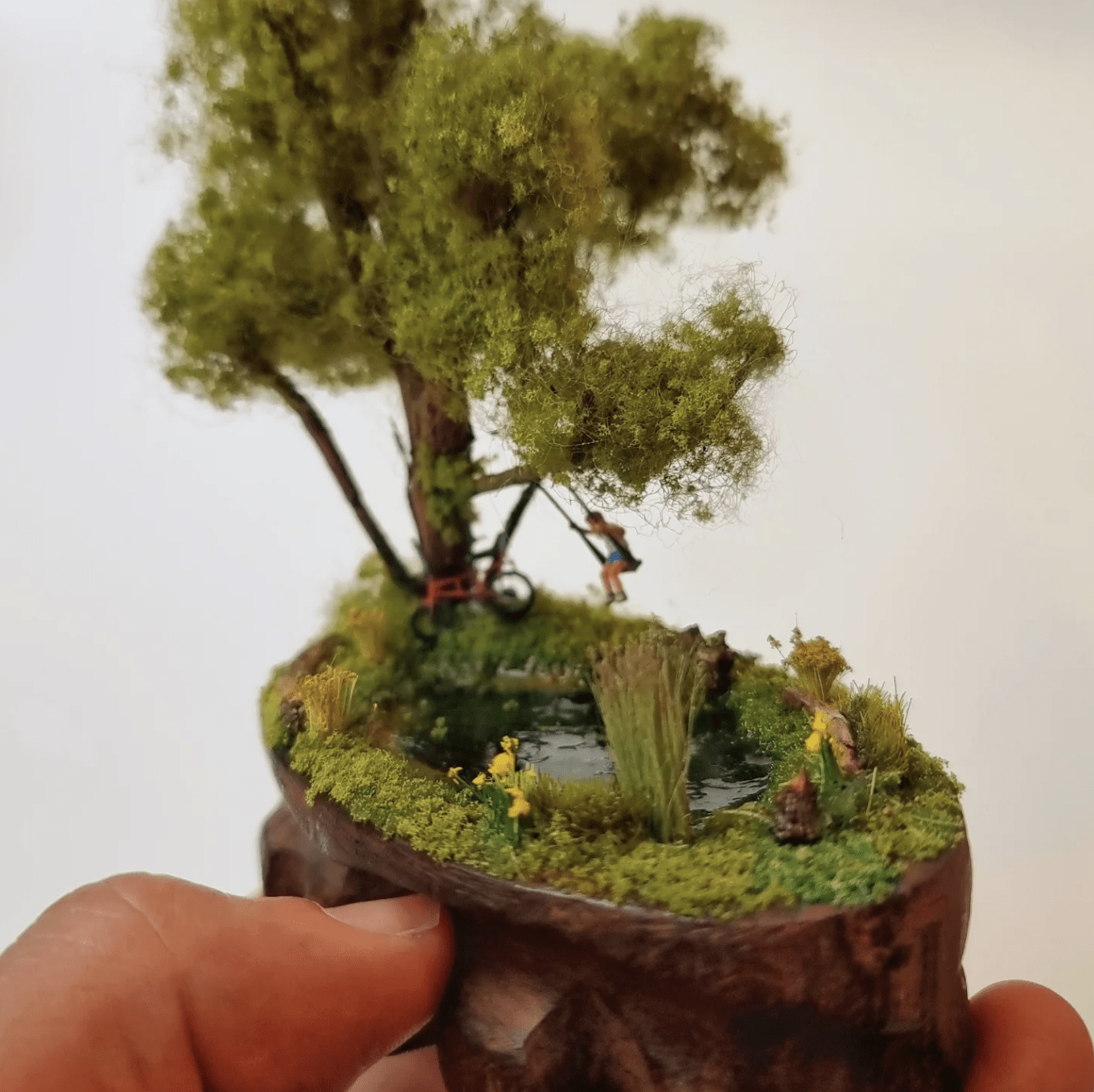
My Boy on a Swing depicts a child beneath a tree, beside a gently flowing river. There’s nothing particularly dramatic about it, yet it’s the sort of scene that can stir a memory, even if the viewer can’t quite explain why.
With pieces like this, the challenge is capturing the feeling rather than reproducing every detail.
The curve of a branch, the position of the swing, the colours of the grass and water all contribute to the atmosphere.
Change one of those elements and the scene can feel quite different.
A little world of its own
I think a successful diorama needs to feel complete, regardless of its size.
It might be a woodland scene beneath a glass cloche, a tiny pond hidden inside an old metal tin or a familiar place recreated from someone’s memories.
Whatever the subject, I want the individual elements to belong together. Nothing should feel as though it’s been added simply to fill a space.
For me, that’s where much of the artistry lies. I think that’s what makes a diorama different from a collection of models. The individual pieces matter, of course, but it’s what happens between them that brings the scene to life.
And when it works, you almost forget how small it really is.
And if there’s ever a place or a memory you’d like to hold onto, you can commission your own little world.
Looking for a gift? A handmade diorama is a one-of-a-kind present for someone who has everything.