Set two pieces of terrain side by side and most people can tell you, almost instantly, which one they'd rather play on. They usually can't say why. It isn't the paint job, or the amount of detail, or how closely it matches a rulebook diagram. It's something quieter than that — whether the piece feels like it was found, or whether it feels like it was made.
That distinction matters more than most terrain-building advice admits. A rock formation that reads as designed usually has a give-away: rocks placed at even intervals, textures repeated a little too neatly, edges that are all roughly the same size. It's not wrong, exactly. It's just legible as a decision, and once a piece of terrain reads as a decision rather than a place, something in the illusion drops away.
Real landscapes don't arrange themselves for balance. Rocks pile up unevenly, because gravity and erosion don't care about composition. Moss grows where damp collects, not where it would look good. When I build a set of scatter rocks, I'm trying to reconstruct that carelessness — sizes that don't quite match, cracks that run somewhere unexpected, a formation that leans rather than sits. The aim isn't to make something impressive. It's to make something that could plausibly have been there for a very long time before anyone rolled a dice near it.
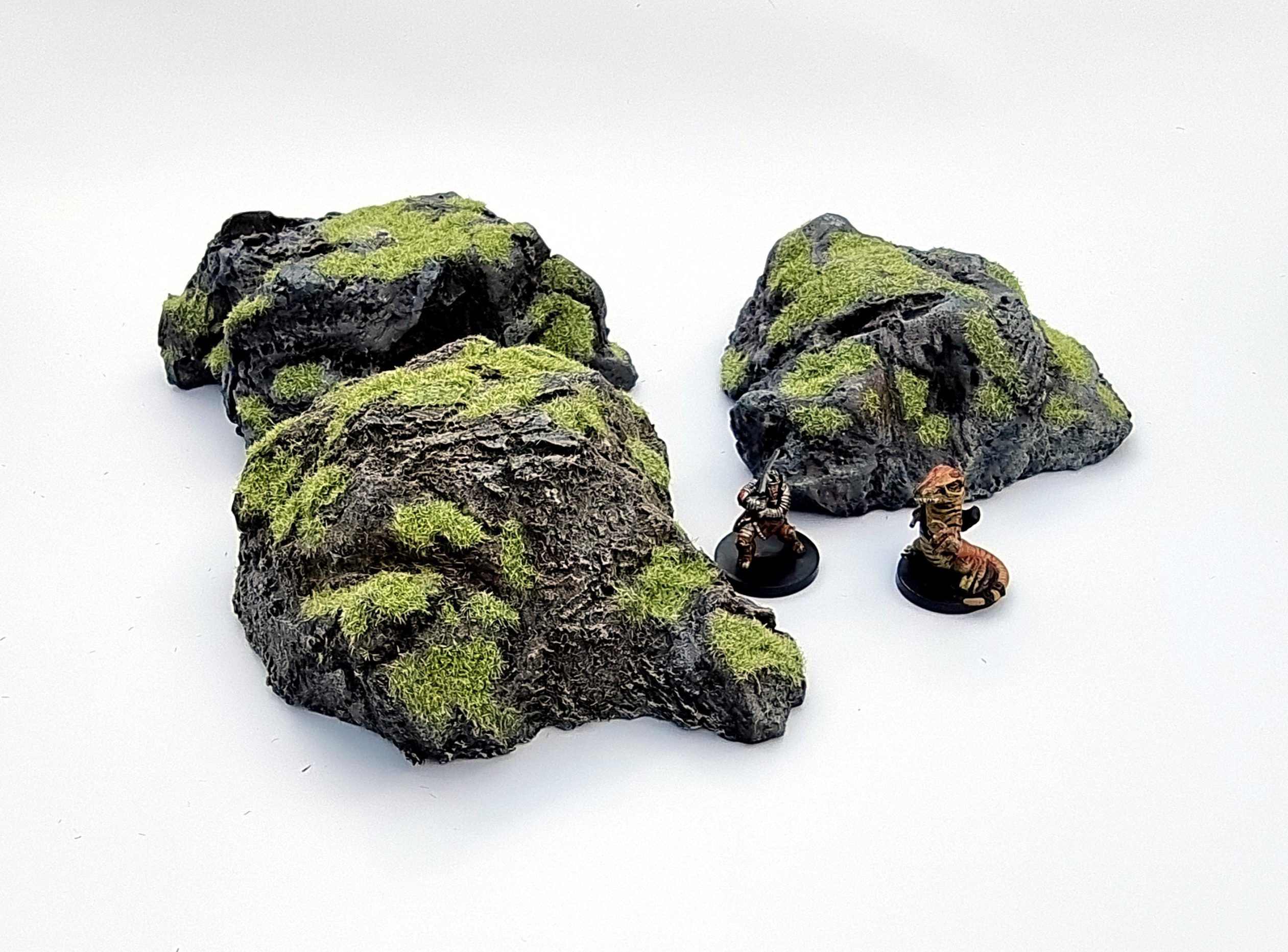
Weathering does most of the quiet work here, and it's the part that's easiest to rush. A rock face straight from the mould, cleanly painted, still reads as a model. It's the dust caught in the low points, the lichen-green picked out unevenly rather than in a wash over everything, the slight darkening where water would have run — that's what tells a story the eye recognises before the brain has worked out why. None of it is dramatic. It's closer to the way a stone wall looks after fifty winters than after one summer's build.
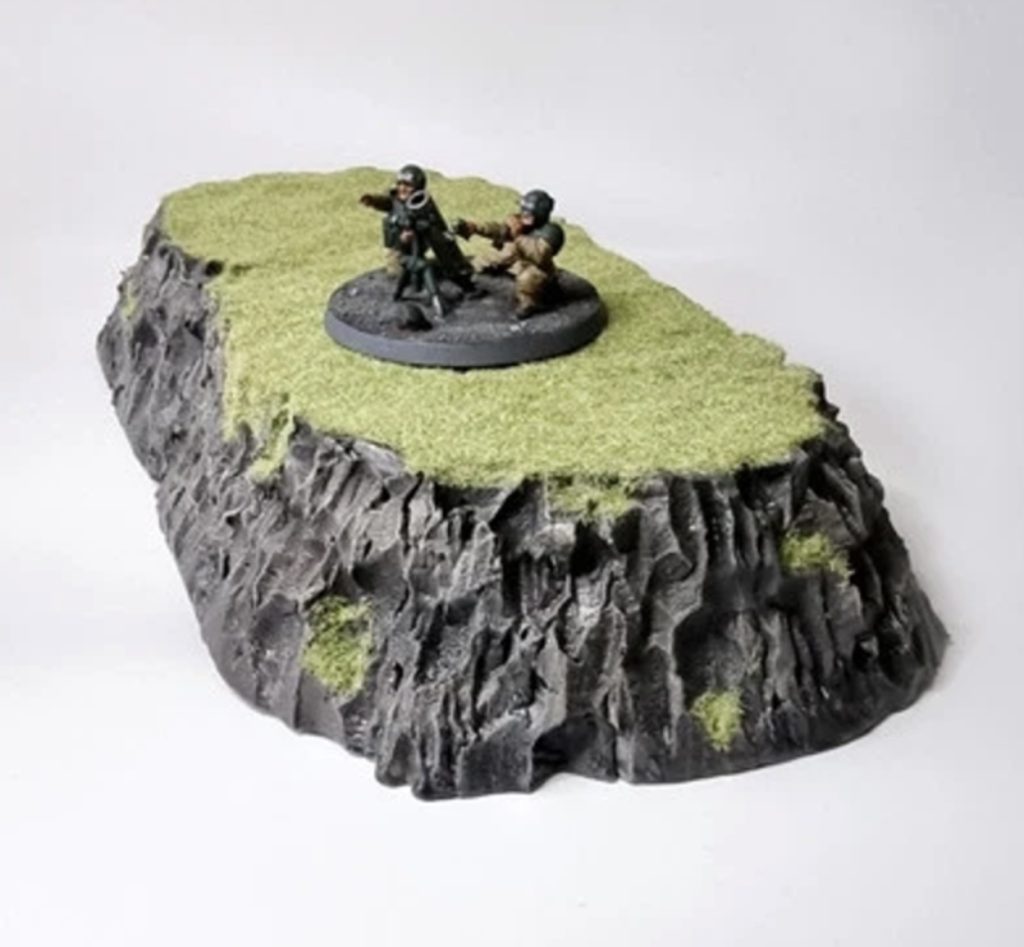
There's a similar logic in scale terrain that has to do more than one job — a hill that needs to hold figures, break sightlines, and still look like ground rather than furniture. A flat-topped hill only earns its place on the table if the slope leading up to it looks like something that eroded there naturally, rather than something extruded to a specific height for gameplay reasons. Function and believability aren't in tension. Terrain that looks real almost always plays better too, because players read cover and elevation more instinctively when the shape makes geological sense.
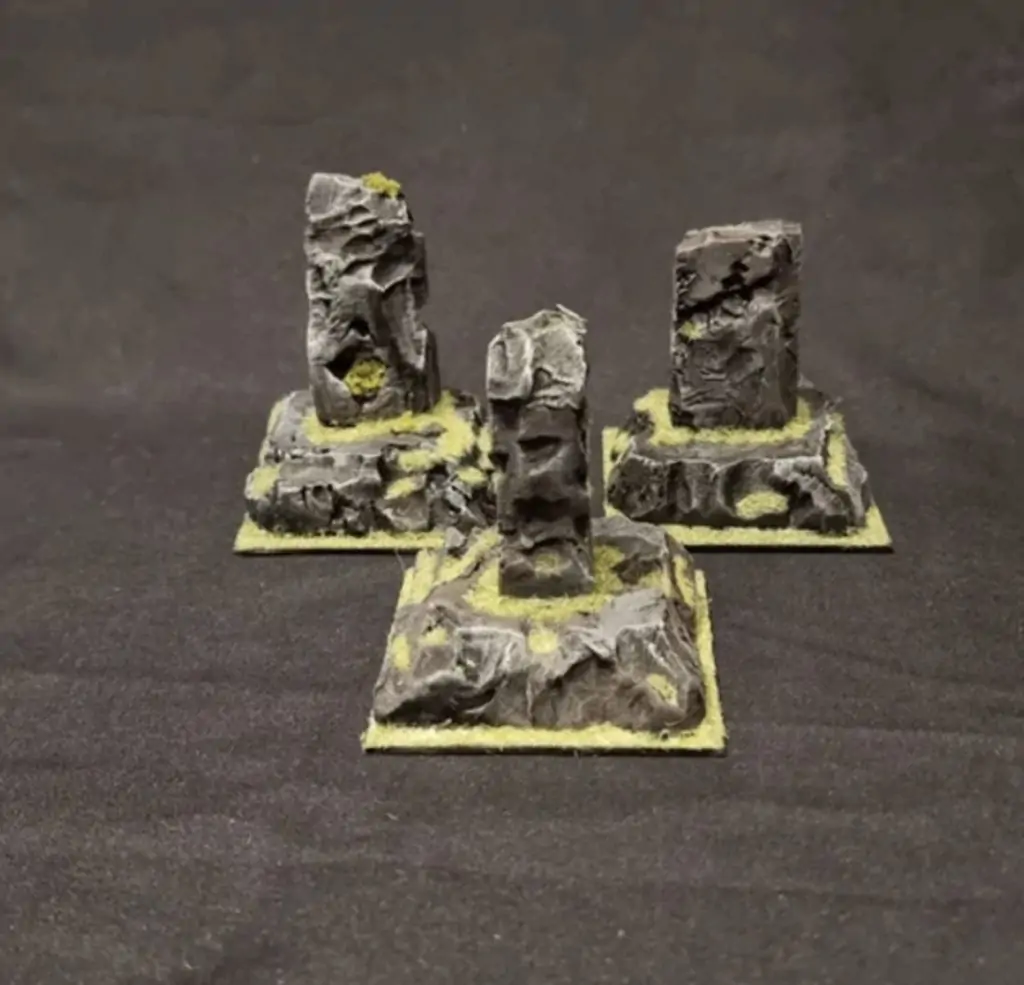
The same restraint applies to the smaller pieces — markers and objective points included. It would be easy to make these ornate, to load them with detail so they announce themselves as special. But a stone marker that looks too deliberate breaks the same spell as an over-tidy rock pile. The pieces that work best are the ones that feel incidental — as if they'd stand there whether or not a game was being played on top of them.
I think this is really what "letting the landscape speak for itself" means. Not adding less, exactly — some of these pieces take longer to weather than to sculpt — but adding things that a landscape would actually have, rather than things a designer would choose to include. Every crack, patch of moss and chipped edge is there because it would plausibly be there, not because it fills a gap in the composition.
Terrain doesn't need to be flashy to hold a table's attention. It needs to disappear a little — to sit under the miniatures and the story being told around them without asking to be noticed itself. The best compliment a piece of terrain can get isn't "that looks amazing." It's quieter than that: a player glancing at it, taking it for granted as ground, and getting straight on with the game.
Browse the full range of handmade wargaming terrain, or get in touch about a bespoke terrain commission built around your table, army or setting.